
Last updated November 21, 2026
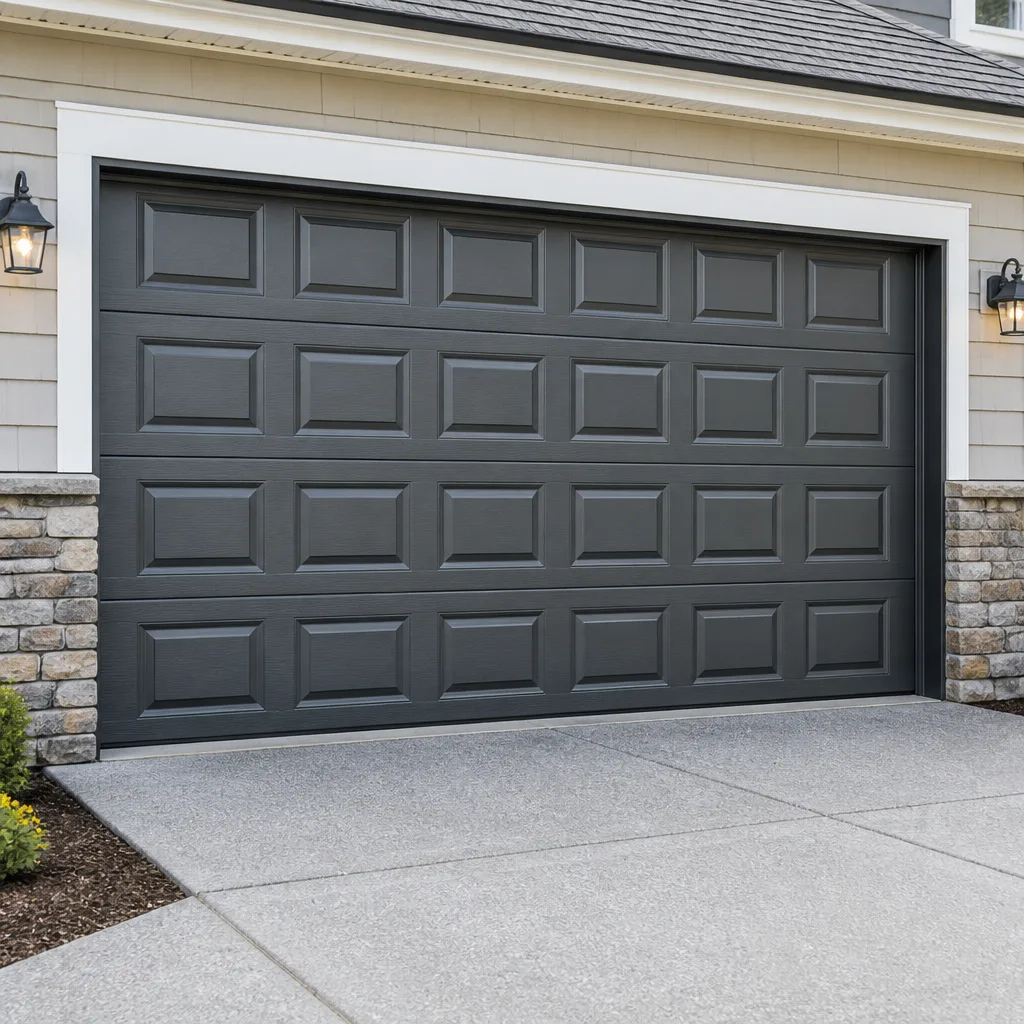 Raised-panel steel
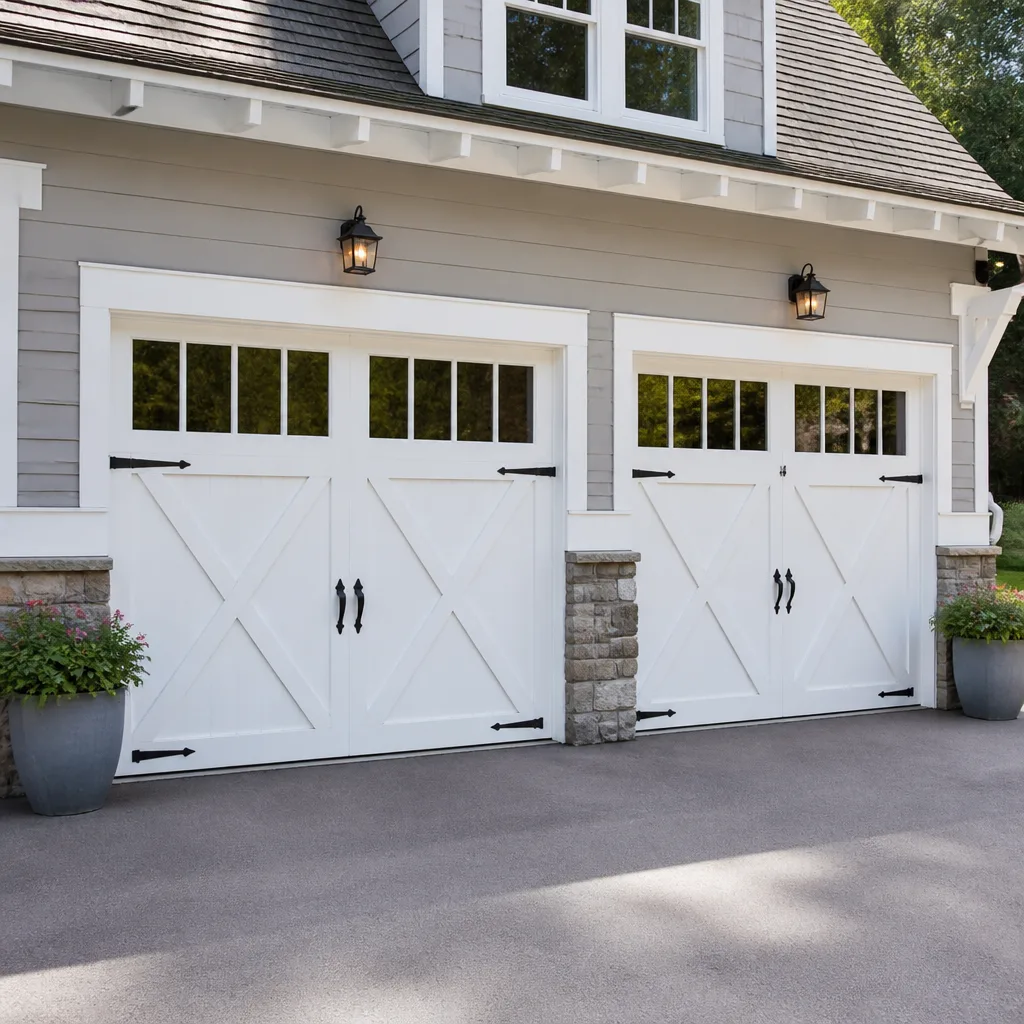 Carriage house
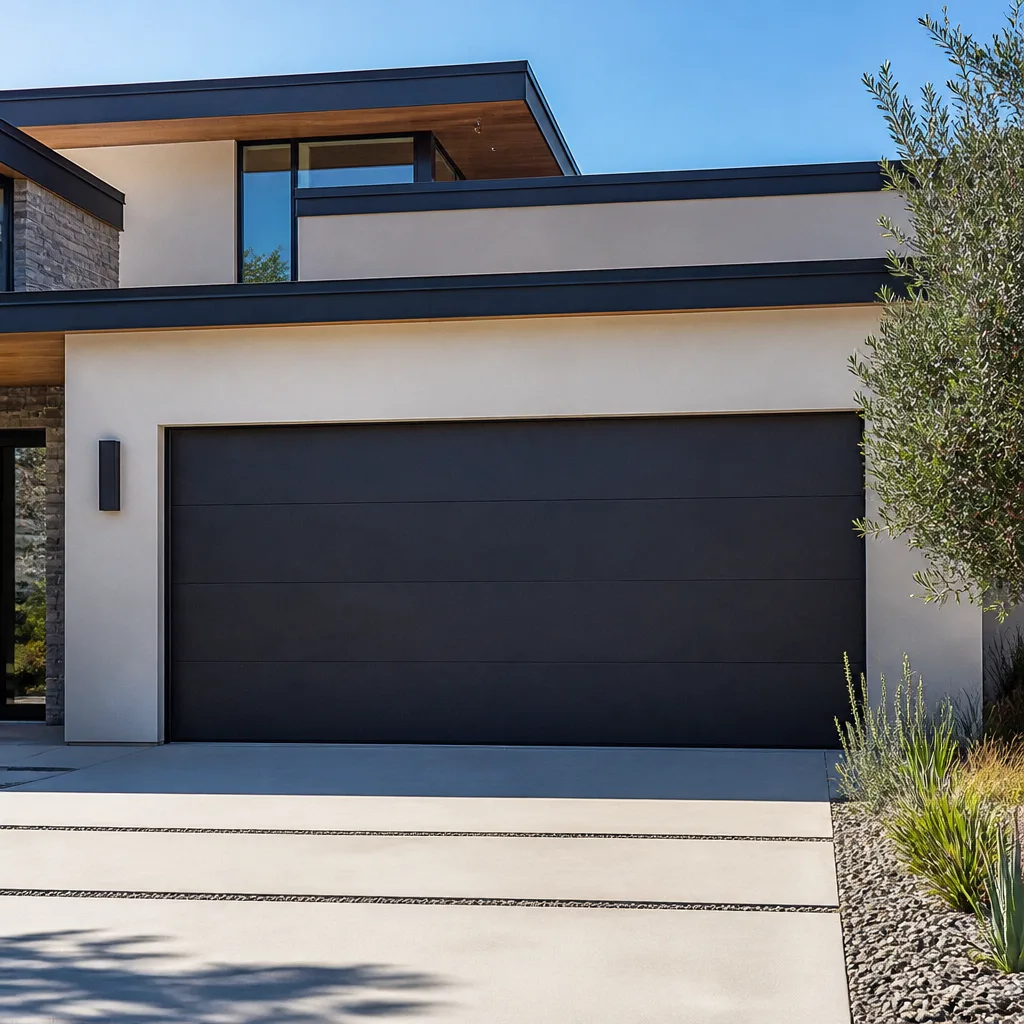 Modern flush
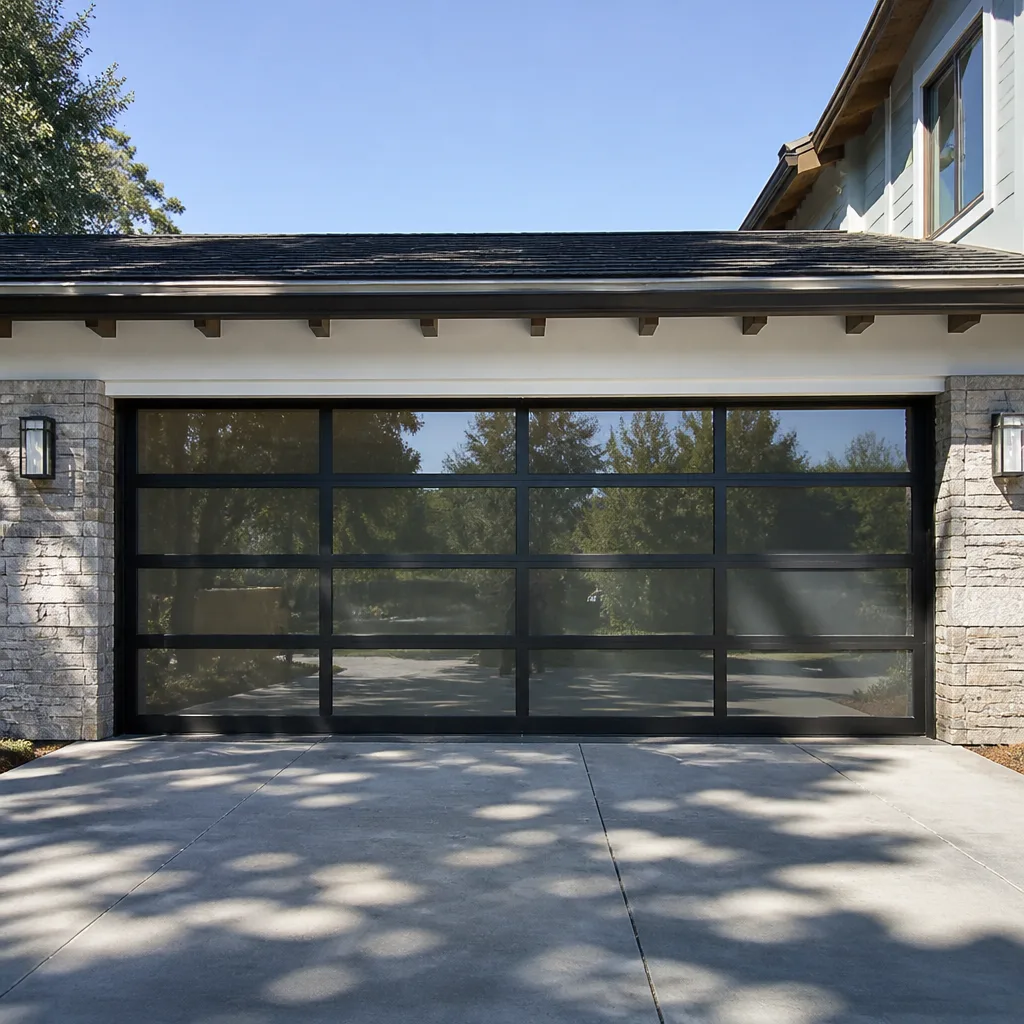 Full-view glass
 LiftMaster openers
 Chamberlain openers
Full 25-point door and opener safety check with every visit - springs, cables, rollers, tracks, and your LiftMaster or Chamberlain opener included
You get a price before we start. It does not change when the pro arrives.
Get your free estimateGarage Door Warning Signs: A Kirkland Homeowner’s Reference Guide
Most garage door advice treats every symptom the same way: make a list, tell the homeowner to keep an eye on things, and leave it there. That approach misses the real problem. Some warning signs are cosmetic and give you weeks to act. Others mean the door could fail the next time it moves, and the difference between those two categories is where serious injuries and expensive secondary damage happen. A door that strains, drags, or hangs unevenly isn’t just irritating to live with; it usually points to friction or spring tension trouble that shortens the life of the opener motor. This guide sorts every common symptom into three urgency tiers so you know what to fix today, this week, or this month. We’re writing it from Kirkland, where the wet climate changes how fast some of these problems show up.
Quick Answer
Garage door warning signs fall into three urgency tiers: Stop Using Now (a snapped spring, a hanging door, a frayed cable, a door that reverses for no reason), Schedule Within a Week (grinding, popping, uneven travel, a loose bottom seal), and Monitor for 30 Days (minor squeaks, a slightly slow start, cosmetic wear). Anything that affects balance, cables, springs, or safe reversal is a stop-use problem. In Kirkland’s wet climate, cable fraying, bottom seal cracking, and track corrosion show up faster than most national guides suggest.
Styles & brands we work with
- Raised-panel steel
- Carriage house
- Modern flush
- Full-view glass
- LiftMaster openers
- Chamberlain openers
Table of Contents
- The Three Urgency Tiers: How to Classify Any Warning Sign
- Sound-Based Diagnostics: What Grinding, Popping, Squealing, and Banging Actually Mean
- Is It the Spring or the Opener? The Misdiagnosis That Costs You Most
- The Visual Asymmetry Test: Spotting an Out-of-Balance Door With No Tools
- Kirkland’s Wet Climate and the Warning Signs It Speeds Up
- Warning Signs Coming From the Opener Itself
- The Safety Reversal Test You Should Run This Month
- What to Do First When You Spot a Warning Sign
The Three Urgency Tiers: How to Classify Any Warning Sign
The single most useful skill in this whole guide is sorting a symptom into the right tier. Getting it wrong in either direction costs you. Treat a cosmetic squeak as an emergency and you’ll panic over a door that’s fine. Treat a frayed cable as a “keep an eye on it” and you’re one cycle away from a door that can’t lift safely and a car stuck inside.
Tier 1: Stop Using Now
These mean the door stays closed until a specialist looks at it. Running a door in this condition risks injury and turns a repairable problem into a replacement.
- A snapped torsion spring, or a door that feels suddenly very heavy to lift by hand
- A frayed, kinked, or slack cable, especially one that’s come off a drum
- A door that hangs visibly crooked or drops on one side
- A broken hinge or a roller that’s jumped its track
- An opener that reverses the door for no clear reason
- Any loud bang from the spring area followed by the door not opening
In Kirkland, a snapped spring in a cold snap or after a stretch of damp weather is the call we get most often. Springs are the most dangerous component on the whole door and the most commonly mishandled repair, which is why we treat them as their own service line rather than a sidelight. We can walk you through what garage door spring repair involves and get the door back in service the same day in most cases.
Tier 2: Schedule Within a Week
These don’t require stopping use today, but they’re trending toward a Tier 1 failure. Book them before they cross the line.
- Grinding or popping during travel
- The door speeds up and slows down on its way up or down
- A roller or track that looks bent but the door still runs
- An opener that strains, hesitates, or gets hot
- A bottom seal that’s cracked, torn, or peeling away from the panel
Tier 3: Monitor for 30 Days
These are worth tracking. Note the date you spotted them and check again in a month.
- A faint squeak or chirp in one spot
- The door starting slightly slower than it used to
- Light surface rust on hardware
- Minor weatherstripping wear at the sides
Write the date on a piece of tape on the wall if it helps. A symptom that’s unchanged after 30 days is usually fine. One that’s gotten louder, slower, or more frequent has moved up a tier.
Sound-Based Diagnostics: What Grinding, Popping, Squealing, and Banging Actually Mean
Your ears are a better diagnostic tool than most homeowners realize. Each of the four common garage door sounds points at a specific mechanical source. Learning the difference means you can describe the problem accurately on the phone, which is the fastest path to a correct repair.
Grinding
Grinding is metal-on-metal contact. It usually comes from rollers that have lost their bearings and are sliding instead of turning, or from a torsion tube or center bearing that’s dry. Left alone, grinding wears the track and the roller stems until the door starts to bind. This is a solid Tier 2 signal; catch it early and you’re replacing rollers, catch it late and you’re replacing hardware across the door.
Popping
A single sharp pop at the start of travel often means a roller is catching on a track joint or a panel hinge is under stress. Repeated popping as the door climbs usually points to the torsion spring winding unevenly or a cable riding wrong on the drum. Popping that appears suddenly and doesn’t go away moves straight to Tier 2, and if it’s paired with the door hanging unevenly it’s Tier 1.
Squealing
High-pitched squealing is friction crying for lubrication: a dry roller, a dry hinge, or a dry bearing. This is usually the mildest of the four and lives in Tier 3 until it turns into grinding. The one exception: squealing from the spring area itself is worth a closer look, since a spring that’s starting to bind can squeal before it fails.
Banging
A hard bang when the door hits the floor or the header means the travel limits are set wrong or the door is dropping under its own weight. That’s a soft-close problem, and it punishes the whole door: panels, hinges, and opener gears take the impact every cycle. It’s a Tier 2 signal that gets more expensive the longer it runs. A single, sharp bang from the spring area, followed by the door refusing to lift, is the sound of a spring breaking and is Tier 1.
If you can hum the description of the sound to yourself and it matches one of these, you already know more than most callers. Our technicians have up to 14 years of experience and have heard every version of these four sounds on every brand we service, from Amarr and Wayne Dalton to Raynor and Craftsman.
Is It the Spring or the Opener? The Misdiagnosis That Costs You Most
The most expensive mistake in garage door repair is replacing the opener when the spring is the problem. It happens constantly. The homeowner hears the opener straining, sees the door barely lift, and assumes the motor is dying. So they replace a perfectly good opener, and the new one strains and dies too, because the spring was never the thing that failed.
The mechanical logic is simple. A torsion spring (or a pair of extension springs) carries most of the door’s weight. The opener only has to lift the small remainder. When a spring loses tension, that balance shifts entirely onto the motor. The motor then works far harder than it was built to, runs hot, and wears out early. Every cycle on a weak spring shortens the opener’s life.
How to tell them apart without tools
- Disconnect the opener using the manual release cord so the door is free of the motor.
- Lift the door by hand to about waist height.
- Let go. A properly balanced door stays roughly where you put it. One that drops fast is spring or balance trouble, not an opener problem.
- If the door is very hard to lift at all, the spring tension is too low, or the spring has failed. Stop here and don’t force it.
If the door balances fine by hand but the opener still struggles, then the opener is the suspect. Our garage door opener repair work starts with this same test, because diagnosing the real source first is what keeps a homeowner from paying twice. The brands we work on most in this situation are LiftMaster, Chamberlain, Genie, and Craftsman openers paired with springs of every age and condition. Replacing the wrong component is the single fastest way to burn through money on a garage door, and it’s why we run the balance test before quoting a repair.
The Visual Asymmetry Test: Spotting an Out-of-Balance Door With No Tools
You don’t need a level, a gauge, or a tape measure to catch an out-of-balance door. You need your eyes and about thirty seconds. The asymmetry test is the fastest way to spot a door that’s heading for a snapped cable, and it’s the check we recommend homeowners in Kirkland run once a month.
Step 1: Stand back and look at the gap
Stand about ten feet back, in line with the door, and look at the gap between the bottom of the door and the floor. A level, balanced door leaves an even gap across its full width. If one side is touching the floor and the other side is off it by more than a fraction, the door is out of balance.
Step 2: Watch the travel
Run the door up and down and watch the top edge and the bottom edge at the same time. A balanced door moves as one solid piece. An out-of-balance door lets one side lead the other, or shudders as it climbs, or jerks sideways on the way down.
Step 3: Look at the cables and drums
With the door closed, look at the cables on both sides. A cable that’s wound unevenly on the drum, slack on one side, or visibly frayed is a Tier 1 stop-use signal. Cables carry the tension a spring releases; when they go, they go fast.
Step 4: Check the panels for straightness
Stand square to the door and sight along the top edge. A curved top edge or panels that don’t line up evenly point to a bent track, a failed hinge, or a door that’s been forcing itself against resistance for a while.
If you spot asymmetry on any of these, don’t run the door repeatedly to “see if it clears up.” It won’t. Every cycle works the cable and the track harder. Call for a proper look. If a cable is visibly frayed or slack, close the door and leave it until a specialist gets there.
Kirkland’s Wet Climate and the Warning Signs It Speeds Up
Kirkland’s climate changes the timeline on some warning signs. It doesn’t create new failure modes; it makes the existing ones show up faster than a national guide would predict. The damp comes and goes with the seasons, and the hardware that lives on the outside of the door (and the bottom of it) feels that cycle more than anything else on the house.
Cable fraying
A cable is a bundle of thin steel strands. Moisture that gets into the cable housing and works on those strands over a wet stretch rusts them from the inside. The cable looks fine from three feet away and is frayed at the drum when you look closely. In Kirkland, this means the “check your cables” advice that most guides file under annual maintenance is worth doing every few months through the wetter half of the year. Frayed cables are Tier 1.
Bottom seal cracking
The rubber or vinyl bottom seal takes the most direct exposure to wet ground and standing water on the driveway. It cracks and peels faster here than in drier climates. A cracked bottom seal isn’t just a draft problem; it lets water sit against the door panel, which speeds up the rust on the bottom edge. Catching it early is cheap; letting it run costs you panel damage. This is a classic Tier 2 signal.
Track corrosion
The vertical and horizontal tracks collect moisture and grime, and the hardware that runs on them (rollers, hinges, brackets) rusts in place. A roller that won’t spin freely grinds instead, which we covered in the sound section. Corroded hardware that’s been left alone long enough will bind the door and put load on the opener. This is another Tier 2 that’s more common in Kirkland than in a dry climate.
Other things that show up faster here: painted steel panels that blister where the paint has chipped (worth monitoring, Tier 3), and the springs themselves, which don’t rust quickly but do trade oil and grease for grime, so a spring that’s never been cleaned and lubricated runs noisier and binds more often. None of this is a reason to worry. It’s a reason to run the checks in this guide more often than a national article would tell you to.
Warning Signs Coming From the Opener Itself
Some warning signs don’t come from the door at all. They come from the opener mounted to the ceiling, and they need to be read differently because the opener wears out in its own specific ways. We service the dominant opener platforms every day, including LiftMaster, Chamberlain, Genie, and Craftsman units, and the symptoms below are the ones that show up most.
- The opener reverses for no reason. Often the safety sensors at the bottom of the door are misaligned or obstructed, or the force settings have drifted. Whatever the cause, a door that reverses randomly is a stop-use problem until it’s sorted: it can close on a person or a pet.
- The opener strains or hesitates. As covered above, this is usually a spring or balance issue, not the motor. Test the door by hand first.
- The remote works only from close range, or intermittently. Usually a battery, a signal conflict, or a logic board issue. LiftMaster and Chamberlain units tend to behave this way when the battery is failing, and it’s a quick diagnostic.
- The opener runs but the door doesn’t move. Could be a stripped gear, a broken chain or belt, or a disconnected carriage. It’s not usually a motor replacement; it’s a specific part.
- The opener bangs or lurches at the top or bottom. Travel limits are wrong, which we covered in the sound section.
- The opener is hot to the touch or smells like burning. Stop using it. A motor that’s overheating because of a weak spring, or a board that’s failing, needs a professional look. Don’t keep pressing the button.
Our garage door repair appointments on opener issues usually start with the balance test and the sensor alignment, because those two checks catch the majority of “the opener is broken” reports before any part is replaced. Being factory-familiar with eight major brands means we can work on the system you already have rather than steering you toward a new one.
The Safety Reversal Test You Should Run This Month
The safety reversal system is the single most important safety feature on your garage door, and it’s the one most homeowners never test. It’s the mechanism that makes the door stop and go back up if something is in the way. If it’s not working, a door that closes on a child, a pet, or a bicycle doesn’t stop. We recommend testing it once a month.
How to run the test
- Stand in a clear spot beside the door, not under it. Never stand in the door’s path when testing.
- Start the door closing.
- Wave a broad object (a rolled towel or a broom handle) through the path of the safety sensors near the floor.
- The door should reverse immediately when the beam is broken.
If the door doesn’t reverse, keep it open for the day, check the sensor alignment (both sensor eyes should be lit and pointing at each other), and call for a look if the alignment is fine but the door still won’t back off. This is a Tier 1 problem until it’s fixed. There’s no “keep using it and see” option with a safety system that isn’t working.
What to Do First When You Spot a Warning Sign
When you notice a symptom, the instinct is to press the button a few more times to see if it repeats. Resist that instinct for anything in Tier 1. A door that’s struggling mechanically punishes every extra cycle. Instead, run this sequence.
- Classify it. Use the three tiers above to decide whether it’s a stop-use, this-week, or monitor problem.
- Stop using the door if it’s Tier 1. Leave it closed and don’t hand-lift it to “check.” A door with a failed spring or a bad cable can drop on you.
- Note the symptom accurately. What sound, when it happens (at the start of travel, at the top, at the bottom), and whether it’s changed recently. Write it down. A clear description shortens the diagnostic.
- Run the by-hand balance test only if the door is otherwise safe to move and it’s not a spring or cable problem. If in doubt, don’t touch it.
- Call for a quote. A free estimate gives you a real number for the repair instead of a guess.
This is where a garage door specialist differs from a general handyman. A door that’s grinding might need a roller swap, a track adjustment, or a spring service, and the specialist knows which by looking at the whole system. Our technicians work exclusively on garage doors and openers. When you call, we’ll ask the tier, the sound, and the balance result, and we’ll book the right visit.
Common Mistakes to Avoid
- Replacing the opener before checking the spring. This is the most expensive mistake we see. The balance test takes a minute; skip it and you buy a motor you didn’t need while the weak spring eats the new one too.
- Hand-lifting a door with a snapped spring. With the spring gone, the whole weight of the door rests on the lifting hardware, and a door that drops can break a wrist or worse. Leave it closed and call.
- Tightening a cable or spring by guesswork. Torsion springs and cables are under enormous tension. A homeowner with a pair of wrenches and a YouTube video is the setup for a serious injury. Springs are a specialist’s job for a reason.
- Ignoring a cracked bottom seal through Kirkland’s wet season. A seal that’s failed lets water sit against the door panel, and the rust that follows costs far more than the seal.
- Lubricating everything in sight. The wrong lubricant on the wrong part (especially on rubber components or in the opener track) attracts grime and makes grinding worse. Ask what’s appropriate for each part.
- Disconnecting the safety sensors to “fix” a reversing door. This removes the feature that makes the door safe around children and pets. Fix the sensor alignment, don’t bypass it.
- Assuming a slow door is just the opener getting old. In most cases, it’s friction or spring tension, and it’s cheaper to catch early than to wait for the motor to fail on top of it.
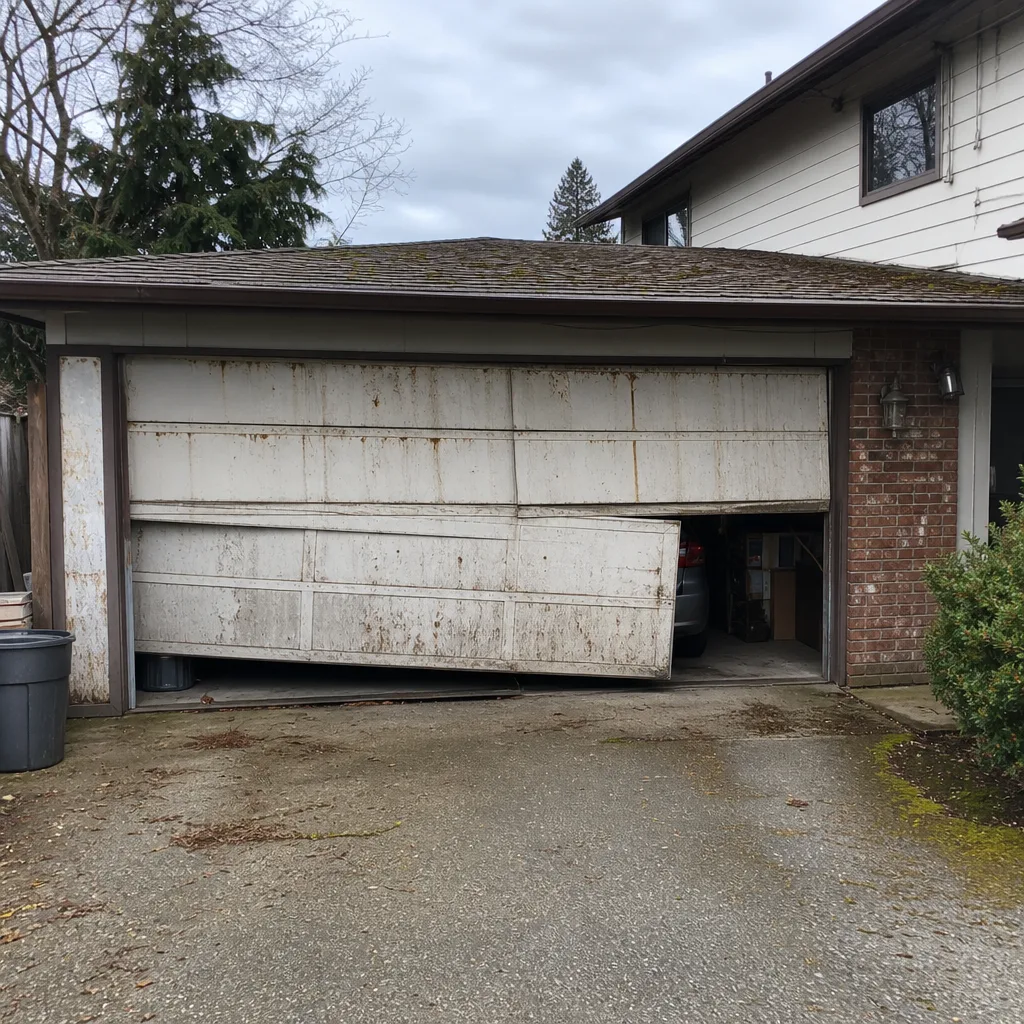
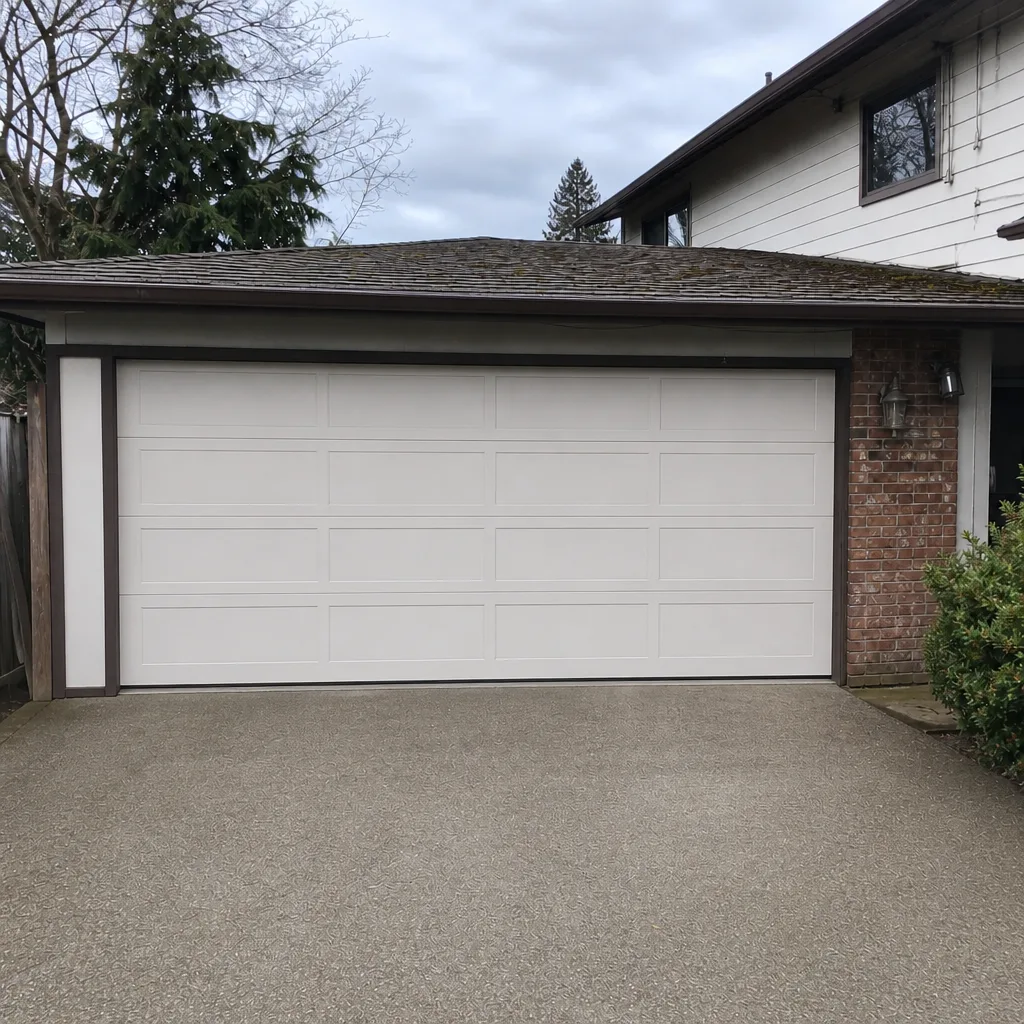
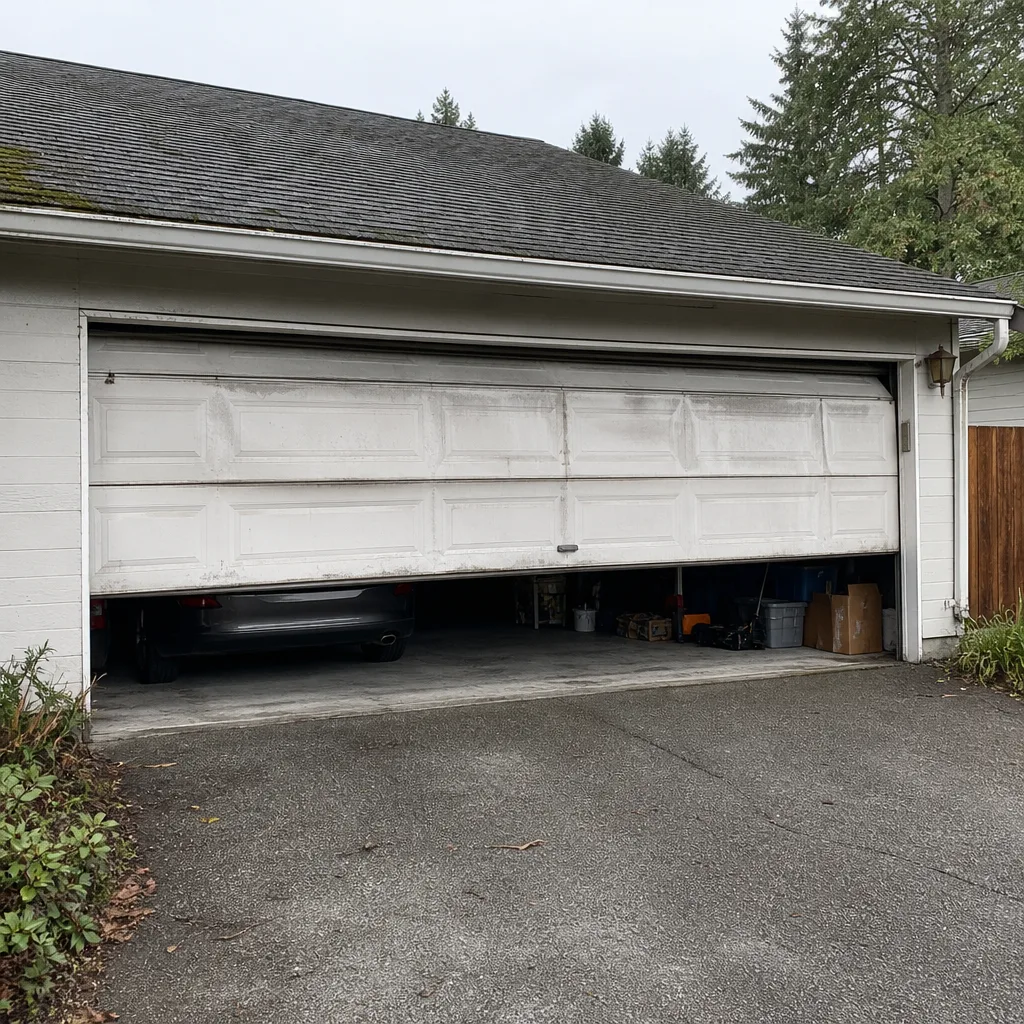
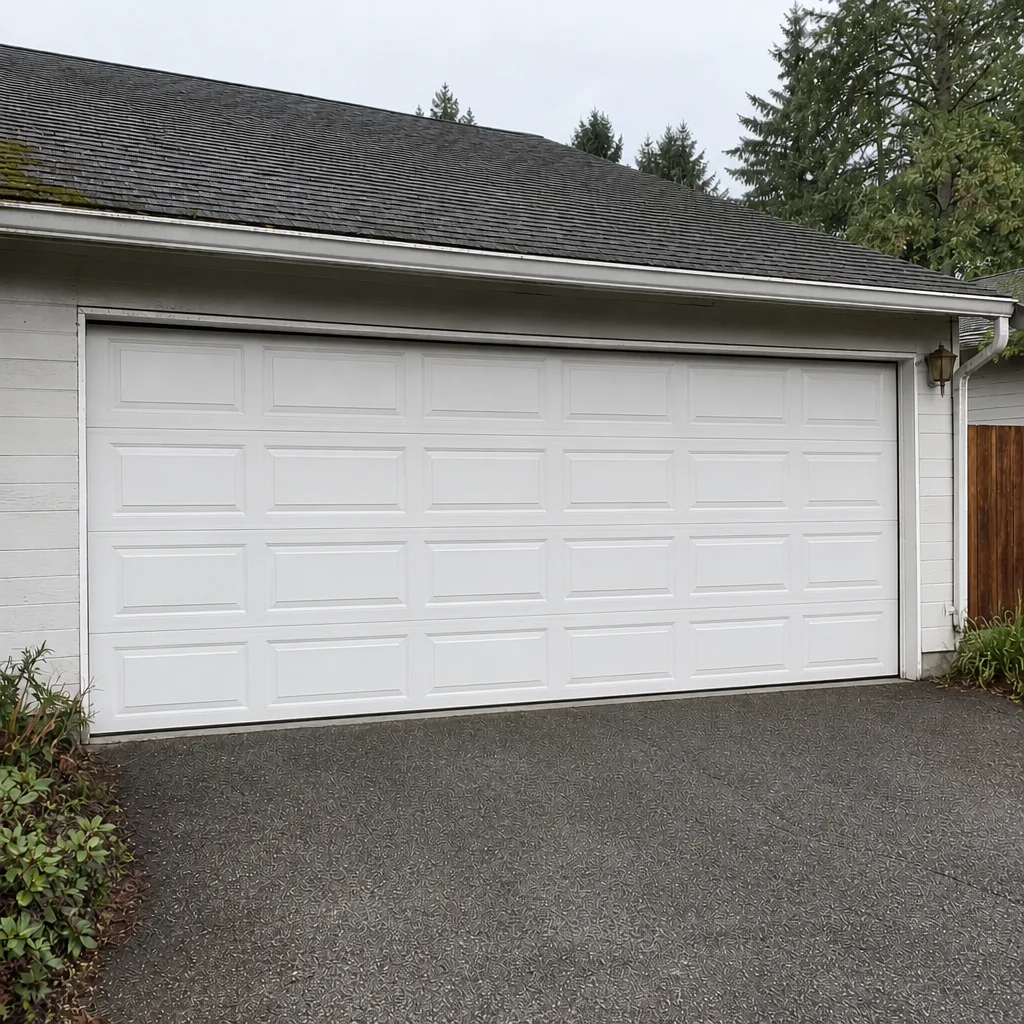
See the difference
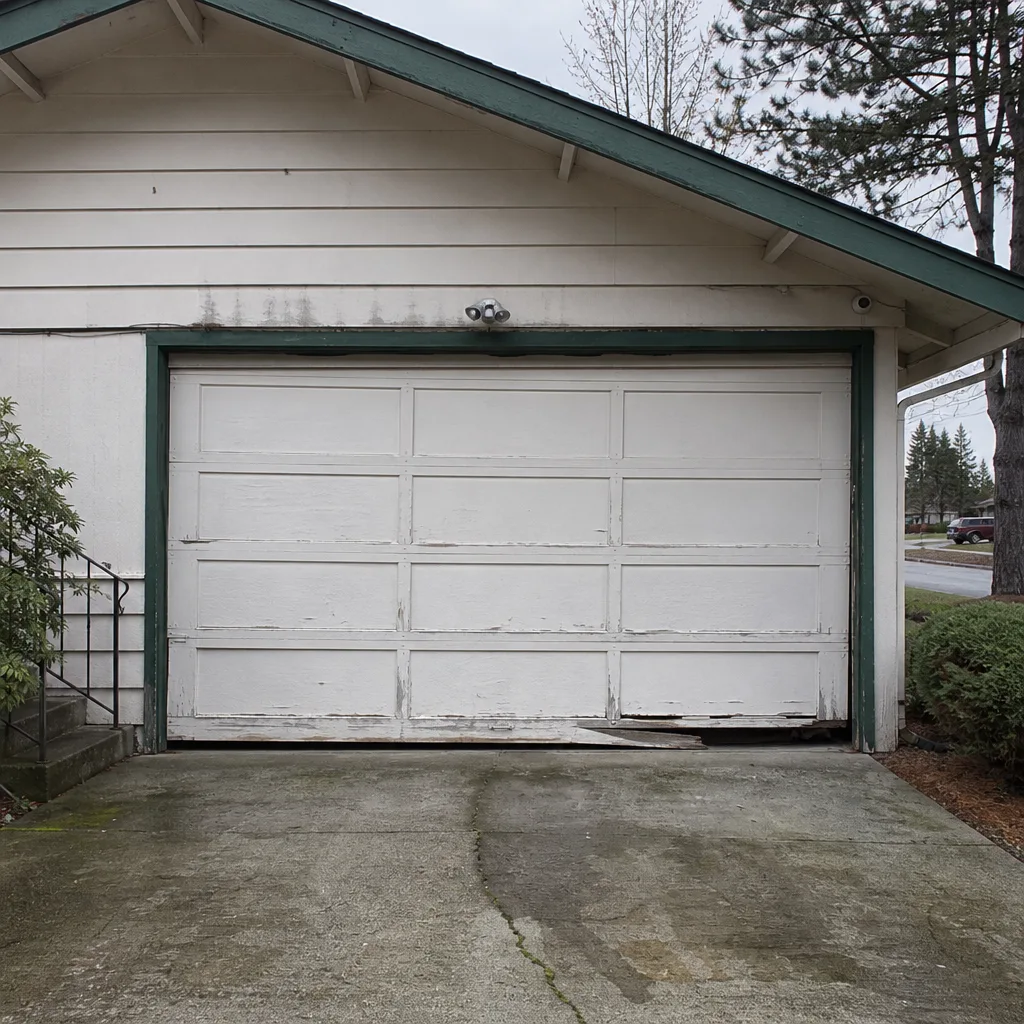 Before
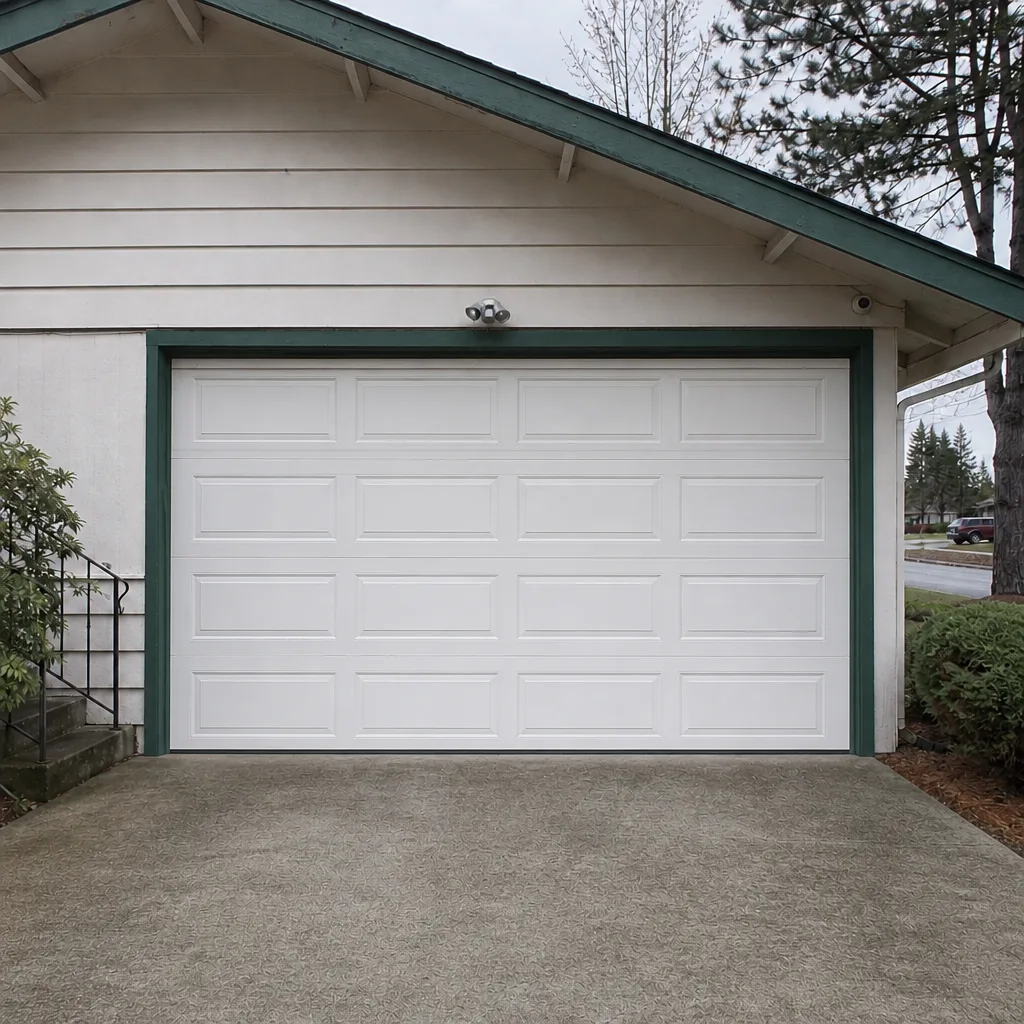 After
 Before
 After
 Before
 After
When to Call a Professional
Call for any Tier 1 symptom: a snapped spring, a frayed or slack cable, a crooked door, a door that reverses for no reason, or a safety reversal test that fails. Call for any Tier 2 signal that’s been present for more than a week, and call for anything you’re unsure how to classify. A professional visit is where a free estimate comes from, and the number is set before any work starts. We work exclusively on garage doors and openers, we’re familiar with LiftMaster, Chamberlain, Genie, Clopay, Amarr, Wayne Dalton, Craftsman, and Raynor equipment, and we handle everything from an emergency fix to a full Kirkland Garage Door Repair Pros service call through the same team. Kirkland Garage Door Repair Pros offers free estimates in Kirkland. Call (855) 981-4153. We answer 24/7. Fast dispatch from 7am to 7pm, Sunday through Friday.
Frequently Asked Questions
The most reliable early indicator is a sudden change in how the door feels and sounds: it gets noticeably heavier to lift by hand, the opener strains, and you may hear a popping or banging. A gap in a torsion spring or a stretched extension spring are direct visual clues. If a spring has already snapped, the door won’t lift at all and should stay closed until a specialist handles it. Call (855) 981-4153 for a free estimate.
No. A mild squeak is usually Tier 3 and often just needs the right lubrication. Grinding, popping, or banging is different and points at worn hardware, a track problem, or a spring that’s binding. Use the sound section above to match what you’re hearing. If the sound started suddenly and hasn’t eased after a few cycles, it’s worth a look. Call (855) 981-4153 and describe the sound; we’ll tell you how soon it should be checked.
No. A frayed or slack cable is a stop-use condition. The cable carries the tension the spring releases, and a failure can send it whipping or drop the door. Close the door, don’t run it, and book a specialist. Call (855) 981-4153. We answer 24/7, and fast dispatch runs from 7am to 7pm, Sunday through Friday.
A door that closes and reverses is almost always a safety sensor problem: misaligned eyes, an obstruction in the beam, or drifted force settings. A door that stops partway while closing can also have a track or balance issue. Either way, treat a door that won’t complete a close as a stop-use condition until it’s checked, since it can close on something or someone. Call (855) 981-4153 for a free estimate.
It makes specific problems show up faster, yes. The damp accelerates cable fraying, bottom seal cracking, and track corrosion in particular. It doesn’t create new failure modes; it shortens the timeline. That’s why we recommend running the checks in this guide more often than a drier climate would call for, especially through the wetter months. Our technicians have up to 14 years of experience with how doors age in Kirkland’s climate. Call (855) 981-4153 with what you’re seeing.
Yes. An out-of-balance door puts uneven load on the cables and hinges every time it moves, and one side works harder than the other. Over many cycles that’s exactly how cables fail. The visual asymmetry test in this guide catches it before that happens, and it takes about thirty seconds with no tools. If you spot asymmetry, don’t keep running the door. Call (855) 981-4153 for a free estimate.
The Bottom Line
The value of a warning sign is entirely in how you classify it. A slow, noisy door is usually a friction or spring tension problem, and the cost of ignoring it is a burned-out opener and a bigger repair bill. A snapped spring or frayed cable is a stop-use problem, and the cost of ignoring it can be an injury. Everything between those two poles is a this-week or this-month item. Run the checks in this guide once a month, run the safety reversal test on the same schedule, and give the door a closer look through Kirkland’s wetter months, when cables, seals, and tracks show their wear fastest. When something’s unclear, describe the sound, the timing, and the balance result, and call. Garage doors are all we do, and a free estimate turns a worry into a number.
Call (855) 981-4153 for a free estimate. We answer 24/7. Fast dispatch from 7am to 7pm, Sunday through Friday.
Written by the team at Kirkland Garage Door Repair Pros.